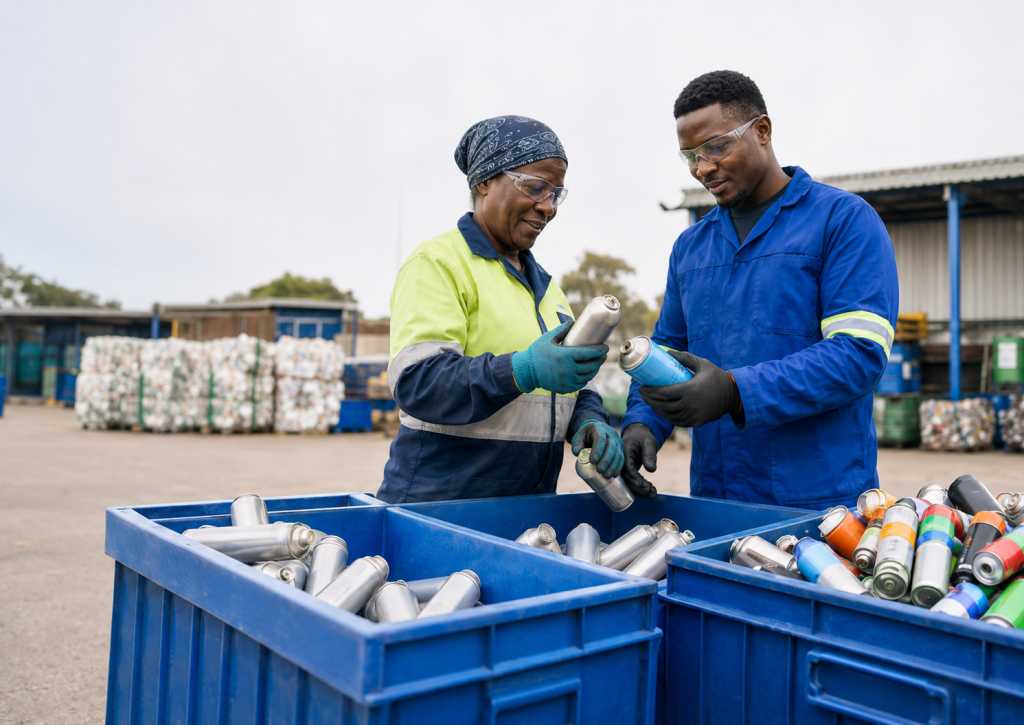
Aluminium and steel aerosol cans are 100% recyclable, yet they present unique challenges once they leave the consumer’s hands. Because used cans can still contain pressurised gas or chemical residues, they require proper handling to enter the recovery stream safely.
New national research commissioned by MetPac-SA—South Africa’s Producer Responsibility Organisation (PRO) for metal packaging—has uncovered practical, high-impact ways to protect the workers handling these materials while boosting recovery rates across the country.
Bridging the “Implementation Gap”
Titled An Evaluation of the Safe Handling and Recovery of Post-Consumer Aerosol Cans in South Africa, the study is the first of its kind locally. Researchers surveyed 272 waste pickers and reclaimers alongside 38 Buy-Back Centres across seven provinces to map out how aluminium and steel aerosols are collected, traded, and recycled.
The findings revealed a surprising insight: the problem isn’t a lack of awareness—it’s an implementation gap.
Daily Reality: Over half of the surveyed Buy-Back Centres receive aerosol cans every single day, proving that aerosols are already a routine part of the local recycling stream.
Known Risks: Almost all Buy-Back Centres recognise that “empty” aerosol cans can still be pressurised or hold residual chemicals.
Missing Systems: Despite knowing the risks, formal safety training, written handling procedures, and consistent Personal Protective Equipment (PPE) remain limited on the ground.
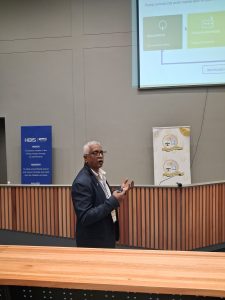
“Rather than finding a lack of awareness, we have discovered an implementation gap,” explains Dr Kishan Singh, CEO of MetPac-SA. “Almost all Buy-Back Centres recognised that apparently empty aerosol cans may still contain pressurised gas or chemical residues, yet formal training, written handling procedures and consistent PPE provision remain limited.”
Supporting the Informal Sector and Fixing Market Barriers
The report underscores the vital role of South Africa’s informal recycling sector. Waste pickers and reclaimers recover massive volumes of recyclable metal before selling it to Buy-Back Centres, making them the backbone of the country’s metal packaging value chain.
However, the study found that market economics hinder recovery just as much as safety concerns. Waste pickers and centres repeatedly pointed to low material prices, inconsistent buyer demand (especially for steel aerosol cans), and limited market access as major barriers. Without reliable buyers and clear acceptance criteria, valuable metal often ends up in landfills unnecessarily.
Practical Solutions Over Complete Overhauls
Crucially, the research shows that South Africa doesn’t need to build entirely new recycling systems from scratch.Instead, targeted, practical interventions can dramatically improve both worker safety and recycling volumes:
On-the-Ground Support: Providing targeted safety training, simple written handling guidelines, dedicated collection procedures, and proper PPE.
Stronger Markets: Building reliable buyer networks and establishing clear acceptance criteria to make collecting steel and aluminium aerosols financially worthwhile.
Industry-Wide Collaboration: Bringing together PROs, recyclers, municipalities, Buy-Back Centres, and waste pickers to deliver an integrated support package rather than isolated fixes.
How Consumers Can Help
This study forms part of a broader MetPac-SA programme launched earlier this year—following the expansion of its Extended Producer Responsibility (EPR) scope in January 2024 to include non-pesticide aluminium and steel aerosols—aimed at tackling harder-to-recycle metal formats like foil, pie trays, coffee pods, and yoghurt closures.
While MetPac-SA works to equip and protect workers further down the value chain, Dr Singh notes that everyday consumers still play the first crucial role in the circular economy:
Use the product completely until the can is empty.
Never puncture, crush, or expose the can to heat.
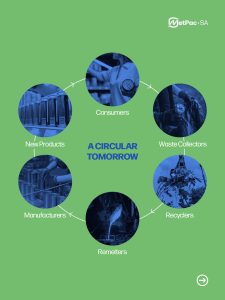
Place it in an appropriate recycling stream so it can be safely recovered and remade.
With an evidence-based roadmap now in place, South Africa has a clear opportunity to turn a tricky waste stream into a safer, more profitable resource for everyone in the recycling chain.